A Fence, Not a Wall: Learning to Love With Boundaries
A Fence, Not a Wall: Learning to Love With Boundaries
I can be sitting in the passenger seat with someone I love and feel completely overwhelmed. The car ahead seems too close. A semi is beside us. There is a concrete wall on the other side, and suddenly I have a very strong opinion about how someone else ought to drive.
It is an ordinary moment, but it reveals something important. I have wants and needs. So does the person beside me. How do I acknowledge those differences without disappearing into someone else's preferences or insisting that everything happen my way?
That is where I keep finding the work of boundaries. I am learning to recognize who I am, say what matters to me, and let another person be who they are.
The Passenger Seat Has Been a Classroom
Over twenty-six years of marriage, Jason and I have had plenty of conversations in the car. I would prefer something like three full car lengths between us and the vehicle ahead. Jason wants the freedom to drive without my anxiety directing every decision.
Sometimes those wants collide. I feel unsafe, and he feels managed. We have tried different ways of handling it. I have become quieter in my reactions, and I have noticed changes in him, too.
I could name a very firm boundary: if the driving continues in a way I cannot tolerate, I need him to pull over so I can get out. But that choice would also leave me with a consequence to manage. I would be a pedestrian. That is part of the honesty of boundaries. I am deciding what I will do, not announcing a magic sentence that guarantees another person will do what I prefer.
What becomes most evident to me in these moments is the invitation to release Jason from being exactly what I am demanding. That does not erase my needs. It helps me distinguish my needs from my attempt to control his response.
Insights and Lessons Learned
1: My Worth Matters Before I Draw the Line
I cannot clearly communicate what I want, need, or prefer if I have lost touch with myself. A weak sense of self can leave me overtaken by other people's desires. But a rigid wall can leave me isolated, too.
I am learning to notice both possibilities. Am I so flexible that I do not recognize my own limits? Or have I become so defended that nobody can come close?
2: A Fence Can Leave Room for Connection
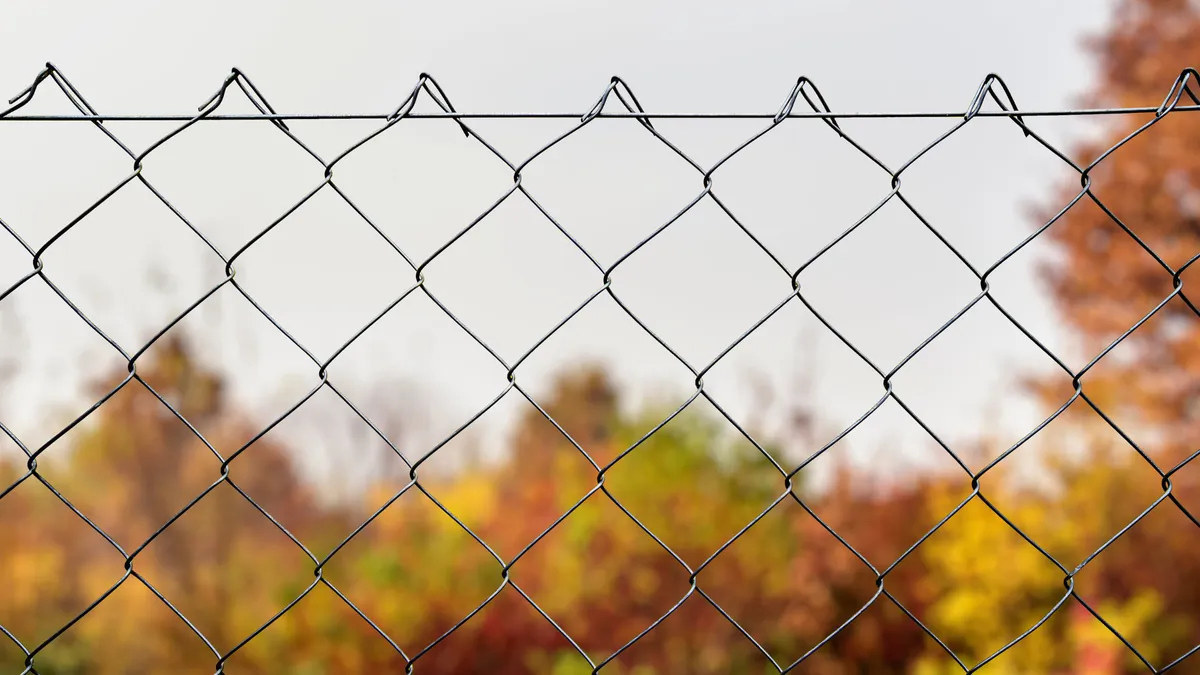
I find the picture of a chain link fence helpful. It identifies a real boundary, but it does not prevent conversation. I can see the person on the other side. I can choose whether to open the gate. I can maintain a limit and still relate.
That gives me a more hopeful picture than either having no boundaries or building a brick wall. I do not have to choose between losing myself and shutting everyone out.
3: A Consequence Is Not the Same as Anger
Parenting gave me practice with this distinction. If a child needs to clean a room before attending a Friday-night event, I can explain that ahead of time. When Friday arrives and the room is not clean, I can acknowledge the disappointment and still hold the consequence.
I do not have to pretend the disappointment is small. I can be genuinely sorry that something important will be missed. But I am not responsible for changing the choice the child made, and my anger is not what makes the boundary real.
4: Love Can Include Confrontation
I have found it helpful to think of confrontation as coming face to face. I can be straightforward about what happened rather than dodging it, denying it, or hoping a boundary will enforce itself.
That kind of honesty is not always comfortable. Still, I need other people to tell me the truth, just as they need me to express my real wants and limits. Love is the foundation, even when the conversation does not feel cozy.
Actionable Steps
Name one real preference. I can start with something ordinary: what I need in a conversation, how I want to spend my time, or what helps me feel safe. I do not have to solve every relationship at once.
Separate my request from my response. I can ask clearly for what I want, then identify what I am prepared to do if that request is not honored. The response needs to be mine to carry out.
Communicate before the conflict. When possible, I can state both the boundary and the consequence ahead of time instead of inventing a consequence in the heat of frustration.
Hold the line without withdrawing compassion. I can acknowledge another person's disappointment and still follow through. Empathy does not require me to erase the limit.
Bring my worth and control to God. I can ask where I have compromised my worth and where I may be trying to make another person be someone they are not.
Reflective Questions
Where do I struggle to recognize my own wants, needs, or preferences?
Does my boundary look more like a fence, a wall, or no boundary at all?
What consequence am I genuinely prepared to follow through on?
Am I asking for something, or trying to control another person's answer?
Where might I honor God by releasing someone to be who they are?
I do not find boundary work simple. Sometimes I am responding to something I do not yet understand, and I need time to notice what has happened inside me. But I can bring that uncertainty to God rather than rushing to either self-abandonment or self-protection.
My prayer is that I will receive more clearly who God made me to be and let other people do the same. I want the definitions in my life to become containers of love: places where I can receive love, express it honestly, and keep growing.
