There Is Still Life Growing
When something frightening enters your life, your mind can begin running ahead of you. Mine certainly did. After my (Jason Settle) diagnosis, there were questions I could not answer and outcomes I could not control. I had to learn again that the future is not a place I can live in. The moment in front of me is.
Elizabeth and I went to the emergency room because of severe abdominal pain. My colon had perforated and ruptured, and I needed emergency surgery in the early hours of April 7. Cancer was mentioned early, but because I had recently had a clean colonoscopy, we did not think that could be the explanation. A few days later, an endoscopy confirmed stomach cancer. The initial message we received was stark: stage four, incurable, inoperable, palliative chemotherapy.
I was asked whether I wanted to know the expected survival statistics. I did not. That was not denial for me. I did not want cancer to tell me how long I would live. It does not get the final word.
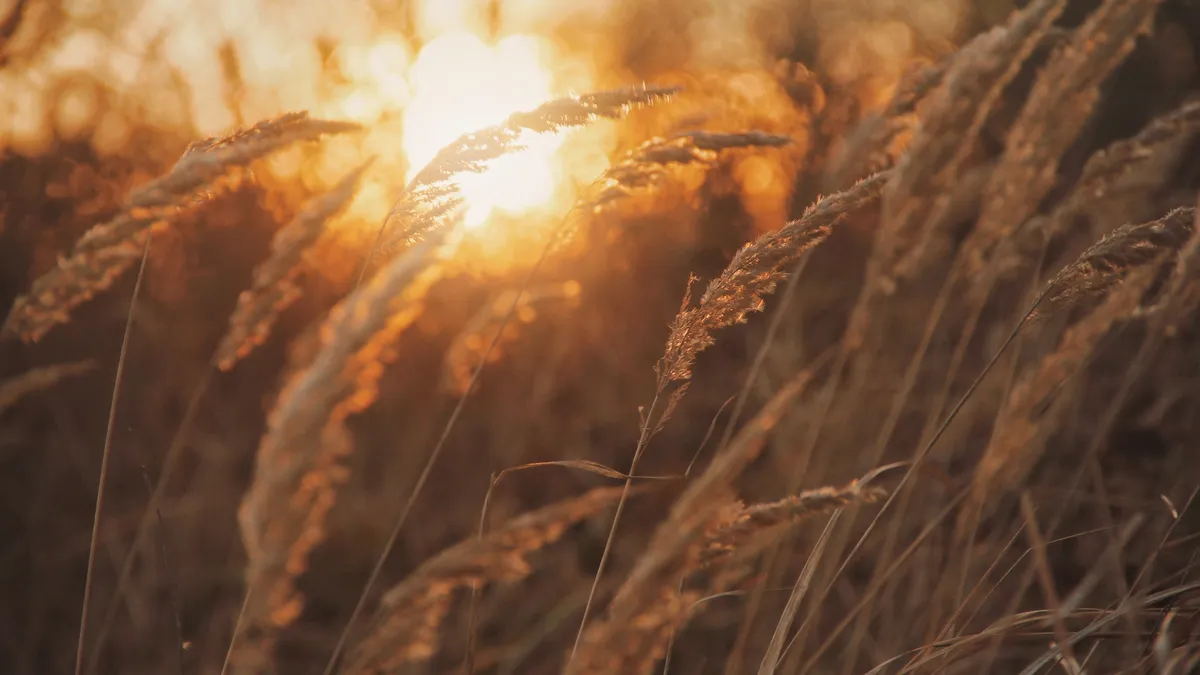
A passage from Matthew 13 came to mind while I was still in the hospital. Jesus tells of wheat growing in a field where an enemy has also planted tares, or weeds. The servants want to pull the weeds immediately. The master tells them to wait, because pulling them too soon could damage the wheat. At harvest, he will separate what needs to go from what needs to remain.
I began to see cancer as a weed in my garden. I do not want it there, and I am not saying I want it to stay forever. We are participating in treatment and doing what we know to do. But I am not the Lord of the harvest. My responsibility is not to obsess over the weed. My responsibility is to tend the wheat.
Insights and Lessons Learned
The hard thing in our lives is real, but it is not the only thing that is real. Even when a weed is present, life can still be growing. Strength, connection, prayer, treatment, wisdom, and ordinary moments of goodness are still available to us.
We also do not have to force every difficult thing into a simple answer. Some things should be removed, and we can partner with God, trusted counselors, doctors, and wise people in that work. Other things may remain beyond our power for a time. In either case, we can ask God what faithfulness looks like today.
Actionable Steps
1. Name the hard thing you are carrying without pretending it is not hard.
2. Notice when your mind is rehearsing a future you cannot control, then return to the moment you are actually living.
3. Ask God, "Is this something to remove, or something to understand and endure for now?"
4. If action is available, take the next faithful step with appropriate help.
5. Tend what is alive in your garden: your relationships, your body, your prayer, your rest, and your hope.
Reflective Questions
• What weed has captured most of my attention lately?
• What signs of life are still growing in my garden?
• Where am I trying to control an outcome that does not belong to me?
• What is one faithful next step I can take today?
• What would it look like to trust the Lord of the harvest with what I cannot resolve?
We all face forms of weakness, loss, and mortality. None of us can arrange a life with no weeds. But we can live from a deeper truth: we are held by a faithful and trustworthy Lord of the harvest. There is still life to receive, nurture, and share today.
